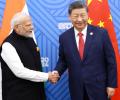
Chinese Foreign Minister Wang Yi said on Friday that India-China relations have made positive strides and achieved a series of encouraging outcomes at all levels after last year's breakthrough ending the over four-year-long military standoff in eastern Ladakh. Wang's remarks came during his annual press conference as he replied to a question on how Beijing views the course of bilateral ties after the two countries ended the prolonged stalemate in the ties.
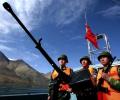
The Chinese side has particularly bolstered its presence in the Galwan Valley, erecting around 100 tents in the last two weeks and bringing in heavy equipment for construction of bunkers, notwithstanding the stiff protest by Indian troops. There have been reports of multiple incidents of transgressions by Chinese troops in several areas in Eastern Ladakh.

Prime Minister Narendra Modi and Chinese President Xi Jinping will hold bilateral talks on Wednesday on the margins of the Brazil, Russia, India, China, South Africa (BRICS) summit in Russia, in their first structured meeting since the eastern Ladakh border row erupted in May 2020.

Chinese Foreign Minister Wang Yi has expressed readiness to join hands with India's National Security Advisor Ajit Doval to "properly handle" issues related to the situation on the ground in the border areas, amid the protracted border row in eastern Ladakh.

China has violated border agreements, External Affairs Minister S Jaishankar said on Tuesday, noting that continued tension will cast a natural shadow over the rest of this relationship.
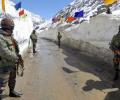
China on Thursday said Chinese and Indian troops have taken "effective measures" to disengage at the Galwan Valley and other areas along the Line of Actual Control in eastern Ladakh and the situation is "stable and improving," days after the two sides agreed on an expeditious withdrawal of soldiers from all the standoff points.

Gandhi's dig at the prime minister came in a tweet wherein he tagged an article in a foreign publication with the headline "India's appeasement policy toward China unravels".
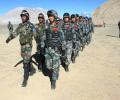
During the course of the intense and complex negotiations between senior commanders of the two armies that ended at 2 am on Wednesday, the Indian delegation also apprised the Chinese PLA about the "red lines" and conveyed that the onus was largely on China to improve the overall situation in the region, the sources said.
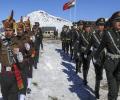
The sources said the mutual disengagement of troops at the two friction points is likely to be completed within two days, and that there has been 'substantial' withdrawal of forces by Chinese military from the areas.

Spokesperson in the MEA Anurag Srivastava said both sides have agreed to work for an early resolution to the issue in keeping with broader guidance provided by leaders of the two countries for ensuring peace and tranquillity along the border areas. He, however, did not respond to questions relating to reports of pulling back of troops by both India and China from certain friction points in the Galwan Valley and Hot Spring areas in eastern Ladakh in the last few days.

Sibal asked Modi to stop doing the politics of "illusion and delusion" and showing "red eyes" to China, and protect Indian territory.
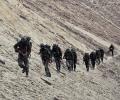
The government needs to answer the critical question of whether it has accepted any restrictions on its infrastructure creation activities, asserts Ajai Shukla.
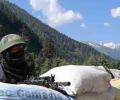
Terming the attack horrendous and barbaric, the CM said soldiers at the front should be "clearly told that if they kill one of ours, you kill three of theirs".

In the review meeting, Singh told the top military brass to continue to deal with the situation in eastern Ladakh and other areas with "firmness".

Sources said the Indian delegation was warmly greeted by senior officials of the Chinese Army before the talks began.
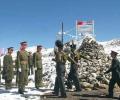
The two sides have already held at least 12 rounds of talks between local commanders and three rounds of talks between major general-rank officials but no positive outcome came out from the discussions, they said.

Lt Gen Dwivedi, who was referring to the clash between the Indian soldiers and Chinese troops in the Galwan Valley in June 2020, also said that PLA's aggression in eastern Ladakh was met with "swift mobilisation and appropriate force posturing".
The enhancement of combat capability by the two armies in the region came even as both the countries continued their efforts to resolve the dispute through talks at military and diplomatic levels.

The Indian Army is one of the very few armies in the world that operates tanks at high altitudes up to 16,000 feet, and in large numbers.

The new guidelines, effective from August 1, aim to expedite visa approvals for nationals from China and other countries sharing land borders with India.
Experts have said the economic cost of China's misadventure in the last couple of months in eastern Ladakh and South China will be "massive" as it has "exposed" Beijing's "real face" when the entire world is fighting coronavirus.

The government has also relaxed certain rules to cut delays in military purchase like allowing the three services to procure required weapons and equipment from a single vendor, the sources said.
In his initial remarks, Army Chief General M M Naravane briefed the commanders about the overall situation following which detailed discussions on the matter took place, the sources said.
China and India were able to "reduce differences" and build "some consensus" on disengaging troops from friction points to end the standoff in eastern Ladakh and agreed to maintain dialogue to reach a resolution acceptable to both sides at an "early date", the Chinese defence ministry said on Thursday.
"There have been no intrusions or major face-offs in the area of responsibility of Eastern Command since the friction erupted in Ladakh," he said.

India has already mobilised fighter jets and sent thousands of additional army troops to forward locations along the border with China after 20 Indian Army personnel were killed in a brutal attack by Chinese troops in eastern Ladakh's Galwan Valley on June 15.

The puja is performed on the banks of river Sindhu (Indus).
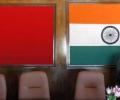
India and China have agreed to take measures to further ease the situation at the borders while continuing to implement the October agreement to resolve the standoff in eastern Ladakh comprehensively. The two sides held the 32nd meeting of the Working Mechanism for Consultation & Coordination on China-India Border Affairs (WMCC) in New Delhi, agreeing to maintain communication through diplomatic and military channels and safeguard sustainable peace and stability in the border areas. This meeting follows the October 21 agreement between the two countries to resolve the over four-year-long military standoff in eastern Ladakh.

The meeting started at around 11.30 am at Moldo on the Chinese side of Line of Actual Control (LAC) opposite Chushul to defuse the tensions in Eastern Ladakh sector due to Chinese military build-up, the sources said. This is the second meeting between the two corps commanders.

In an open letter, the Confederation of All India Traders has appealed to Aamir Khan, Deepika Padukone, Katrina Kaif, Virat Kohli and others to stop endorsing Chinese products. It has also invited Amitabh Bachchan, Akshay Kumar, Shilpa Shetty, Madhuri Dixit, Mahendra Singh Dhoni, Sachin Tendulkar and others to join the campaign to boycott Chinese products under its flagship national movement 'Bharatiya Saaman-Hamara Abhiman'.

"The contents of video being circulated are not authenticated. Attempt to link it with the situation on the Northern borders is mala fide," the army said in a statement. It said differences between the two sides are being addressed through interaction between military commanders following established protocols on management of border between the two countries.

The situation along the Line of Actual Control (LAC) in eastern Ladakh is stable but sensitive and not normal, Chief of Army Staff General Upendra Dwivedi said on Tuesday on the dragging military standoff between China and India in the region.
People familiar with the situation in the region said the two sides were engaged in trying to resolve the dispute, but there was no indication of a positive outcome yet as both the armies continued to bolster their positions in disputed areas of Pangong Tso and Galwan Valley and Demchok.

'It is unfortunate that aspersions are being cast on how our brave Armed Forces are treated. The armed forces give the best possible treatment to their personnel'

"The message is clear. We're not going to stand by and let China or anyone else take the reins in terms of being the most powerful, dominant force, whether it's in that region or over here," White House Chief of Staff Mark Meadows told Fox News.

The former Congress president has been questioning the government over the martyrdom of Indian soldiers and has demanded answers from the prime minister.

The agreement will allow sharing of high-end military technology, classified satellite data and critical information between the two countries.
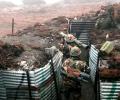
The Chinese military on Thursday said the situation along the India-China border 'at present' is 'generally stable' and both sides have maintained 'effective' communication to resolve the military standoff in eastern Ladakh.
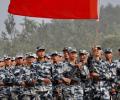
The Chinese action followed 'India's recent, illegal construction of defence facilities across the border into Chinese territory in the Galwan Valley region', a write-up in the state-run Global Times tabloid said, quoting unnamed military sources.

Jaishankar said, "The immediate part which awaits us is what we call the de-escalation, which is the build-up of forces along the Line of Actual Control."
